Your Essential Guide to Halibut

In the 1800s, New England fishing fleets didn't make special trips for halibut. They were found almost everywhere along the Atlantic seafloor north of Montauk. Gloucester schooners working the offshore banks would bring up halibut as big as 500 pounds alongside their cod and haddock catch, bringing ashore more halibut than the Boston markets could consistently move.
Decades of intensive commercial fishing stripped the Gulf of Maine of most halibut by the mid-20th century. The fish that once seemed inexhaustible became rare enough that regulators had to step in with strict catch limits to give the stock a chance to recover. Today, carefully managed fisheries in Canada and the US are working to bring halibut back as a reliable, responsibly sourced option. As proud purveyors of sustainably caught halibut, we’re sharing everything you need to know about these massive flatfish.
- What Is Halibut?
- What Does Halibut Taste Like?
- Types of Halibut
- Halibut vs. Flounder: What's the Difference?
- Is Halibut Healthy?
- Tips For Buying Halibut
What Is Halibut?
Halibut belong to the Pleuronectidae flatfish family, which includes flounder and fluke, reaching hundreds of pounds and over 8 feet long. Most halibut that reach market are closer to 10-85lb and 3-5ft long. They start life swimming upright like other fish, with eyes on both sides of their heads, before undergoing a metamorphosis. One eye migrates across the skull to join the other, and the fish begins swimming sideways and becoming flat. The upper side darkens to blend with the ocean floor while the underside stays white. Both eyes now sit on the top of the head, perfectly positioned to scan for prey while the fish lies camouflaged on the bottom. It's a complete structural transformation built for ambush from below.
What Does Halibut Taste Like?
Halibut tastes relatively sweet, clean, and overall mild. Halibut is noticeably sweeter than cod, with firmer texture and similar flakes. When cooked properly, halibut delivers a tender bite with satisfying chew. The meat holds together under high heat, making it ideal for grilling and searing, where more delicate fish, like flounder or sole, would fall apart. This makes it particularly forgiving for home cooks still learning to judge doneness and try new techniques.
What Do Halibut Eat?
Halibut are not picky about what they eat. Researchers have found cod, haddock, herring, crab, clams, lobster, octopus, and smaller halibut in their stomachs. As groundfish, halibut prefer to eat near the seafloor and will rise through the water column if the prey is worth the effort.
Types of Halibut
Atlantic and Pacific halibut are the two main species of halibut you will likely encounter at the market. They are closely related, share the same basic body plan, and taste similar at the table.
-
Atlantic halibut (Hippoglossus hippoglossus) stretch from Greenland to Virginia, though most prefer waters no farther south than the Gulf of Maine. Atlantic halibut earned their place as the largest flatfish species in the world, reaching 15 feet in length, and can live up to 50 years. Females grow larger than males, averaging 100 to 150 pounds at maturity. Robert DiGregorio, Fulton Fish Market's Head of Quality Control, notes, "the largest halibut I've ever seen personally was just over 400 pounds, and the heaviest recorded was 700 pounds."
Atlantic halibut are revered by East Coast chefs as fine-dining centerpieces, found in high-end restaurants and loved by savvy home cooks. Atlantic halibut can be found fresh year-round, with peak seasons from April to October.
-
Pacific halibut (Hippoglossus stenolepis) range from Alaska to California across the North Pacific, extending west to Japan. Females can reach up to 500 pounds and 8 feet in length, while males average around 30 pounds and a few feet.
Slightly leaner than their Atlantic cousins, Pacific halibut is prepared by West Coast chefs in various formats, from humbly fried fish tacos and fish & chips to pecan-encrusted halibut portions. Fresh Pacific halibut season runs from March through November, with frozen cuts available year-round.
What Are The Common Cuts of Halibut?
Halibut breaks down into several distinct cuts, each with different characteristics and uses.
- Fillets and portions represent the most common way to buy halibut. These boneless cuts come from the sides of the fish, and are typically sold as portions (individual serving-sized pieces) or larger fillet sections. At Fulton Fish Market, we offer halibut portions that are skin-off, boneless, and ready to cook.
- Halibut steaks are cross-sections cut through the spine. These were once popular but have fallen out of favor as more people prefer the convenience of boneless portions. Halibut steaks still show up occasionally, valued by cooks who appreciate the extra flavor the bones bring to the pan.
- Halibut collars come from where the head connects to the body. This section contains some of the richest, most flavorful meat on the whole fish. As DiGregorio explains, "Old fish guys like me know that fish collars are great eating. Very flavorful, rich, fatty, and tender." Halibut collars contain more fat than the fillet meat, resulting in deeper flavor and a moister texture even when cooked at higher temperatures. The cut requires navigating around bones, and the reward justifies the effort. Collars work beautifully roasted or grilled as a main course, developing crispy, caramelized edges while staying succulent inside. Some cooks use halibut collars to produce collagen-packed stocks.
-
Halibut cheeks might be the most underrated cut in the entire fish. These small, round muscles come from either side of the fish's head, producing two cheeks that each weigh a few ounces. The meat is incredibly tender with a firm texture similar to scallops. In fact, many people who try halibut cheeks for the first time compare them to scallops, both in texture and in how they cook. Like scallops, halibut cheeks benefit from quick, high-heat cooking. Because each fish yields only two cheeks, they're harder to find at market than fillets. When you see them available, they're worth trying. The small size makes them perfect for appetizers, and their scallop-like texture appeals to people who might otherwise skip fish entirely.
Halibut vs. Flounder: What's the Difference?
Halibut and flounder share the same fundamental architecture: flat profile, both eyes on one side, dark on top, and white underneath. Otherwise, these fish couldn’t be more different.
Flounder is a broad category covering dozens of species, most of which are smaller, more delicate fish that benefit from gentle cooking. Halibut is denser and meatier, structured enough to handle a ripping-hot grill or a hard cast-iron sear without falling apart. A halibut steak holds its shape in a way that most flounder fillets won't. In terms of flavor, halibut has more depth and a fuller, slightly richer finish, while most flounder species sit at the lighter, more neutral end of the white fish spectrum. Both flounder and halibut are worth trying, with each suited for different preparations.
Is Halibut Healthy?
Halibut is a healthy white fish, packed with lean protein and other nutrients. A 3.5-ounce serving of halibut delivers around 20g of protein with only 2.3 grams of fat and 0g of saturated fat. Halibut’s an excellent source of selenium, niacin, phosphorus, and vitamin B12. Pacific and Atlantic halibut have about 500mg and 900mg of omega-3 fatty acids per serving, respectively. Low in saturated fat and sodium, halibut fits into heart-healthy diets and is ideal for people watching calories without sacrificing satisfaction.
How Is Halibut Harvested?
Commercial halibut fishermen primarily use longlining methods, setting a series of hooks along the ocean floor where halibut hunt. This targeted approach minimizes bycatch and habitat impacts from halibut fishing. Some fisheries also use smaller-scale handline and jig methods to catch halibut. Strict management controls when and how much halibut boats can catch to ensure long-term sustainability. Fish must also meet minimum size requirements, typically 32 to 41 inches, depending on location, ensuring younger halibut reach breeding age before harvest.
Tips For Buying Halibut
Fresh halibut should look almost luminous at the cut face: bright white to pale ivory, with no yellowing or dried-out edges. The flesh should be firm and spring back lightly when pressed. Any ammonia smell or flesh that feels soft and slippery rather than firm means the fish is past its prime. Truly fresh halibut has almost no odor beyond clean ocean air.
Frozen halibut, when handled correctly, is an excellent option and often fresher than "fresh" fish that has spent several days at sea and in transit. When buying frozen halibut, look for vacuum-sealed packaging with no air pockets and flesh that's uniformly white, with no dark or dried-out patches. Avoid purchasing halibut with thick white frost on the surface, any grayish discoloration, or packaging that's been punctured or partially thawed and refrozen. These are signs of freezer burn, which strips moisture and flavor and turns the texture
Regardless of whether you’re shopping for fresh or frozen halibut, it’s important that it’s sourced responsibly. At Fulton Fish Market, we guarantee the freshest halibut and pride ourselves on sustainability to make buying halibut as easy as possible. Here’s what Carol from the US had to say about our halibut on Trustpilot:
"Everything about the experience was awesome…the packing, the timely shipping, and most of all the halibut. I will be ordering again soon."
How To Cook Halibut
Halibut's firm, dense flesh makes it one of the most forgiving fish in the kitchen. It holds up to grilling without falling through the grates, takes a hard sear in a hot pan, and stays intact when baked or poached. The one thing to watch out for when cooking halibut is moisture loss. Both Pacific and Atlantic halibut are lean fish that can dry out quickly if overcooked. Pull the halibut from the heat when the interior just turns opaque for best results. An internal temperature of 130-135°F gives you a moist, just-cooked result; residual heat will carry it to 140°F. A two-minute rest before serving makes a noticeable difference. See our favorite recipes below to put your new halibut knowledge to work.
Halibut Recipes
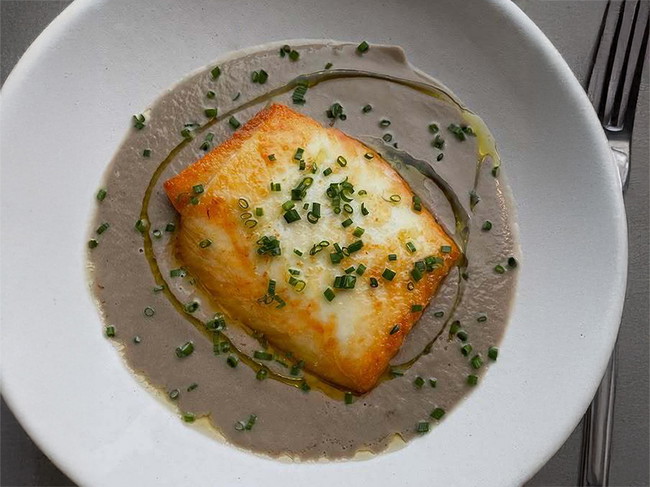
Seared Halibut with Mushroom Sauce Recipe
A golden crust meets earthy mushrooms in this restaurant-quality dish that takes less than 30 minutes. The rich sauce complements halibut's sweet flavor without overwhelming it.
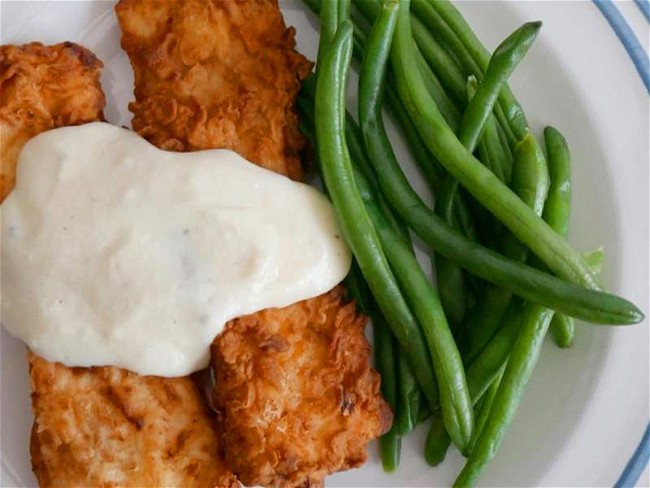
Crispy, golden coating over tender halibut, finished with country gravy. This comfort food classic proves that fish doesn't have to be fancy to be satisfying.
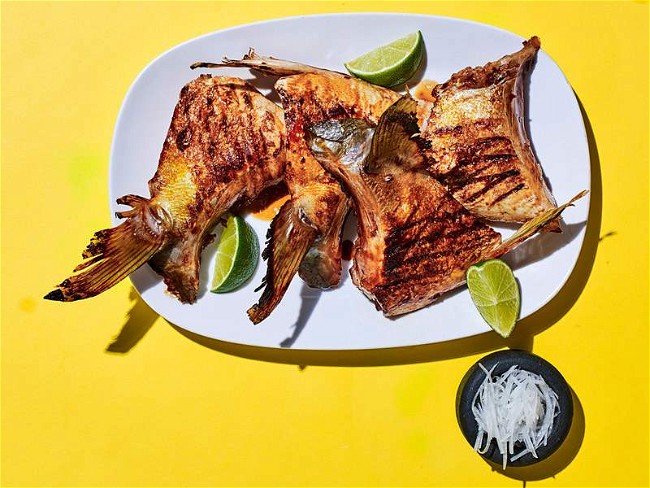
Sesame Ginger Halibut Collars Recipe
Turn this often-overlooked cut into the best thing on your plate. Roasted collars develop crispy edges while remaining rich and succulent inside, with sesame and ginger adding depth to the already-flavorful meat.
FAQs
Is halibut kosher?
Yes, halibut is kosher. It has both fins and scales, the two requirements under Jewish dietary law for a fish to be classified as kosher.
Does halibut taste fishy?
No, halibut shouldn’t taste “fishy” at all! Quality halibut has a clean, moderately rich flavor with almost no "fishiness" to it. Its restrained flavor profile makes it one of the more approachable fish for people who find stronger-tasting species off-putting, while its texture and depth still make it satisfying for regular fish eaters.
Can you eat halibut raw?
Halibut can be served as crudo or tartare, requiring super-freezing first to eliminate the risk of parasites, a standard treatment for any fish intended for raw consumption. Fresh halibut that hasn't been super-frozen should be cooked before eating.
