Your Essential Guide to Swordfish

For generations of fishermen in the Northeast US, swordfish was the fish worth risking your life for. Harpoon fishing, practiced off Cape Cod and Montauk since the 1800s, required standing at the bow of a small vessel, scanning the water for a dorsal fin at the surface, and throwing a 14-foot pole by hand. It was precise, dangerous work with a trophy fish and hefty payday on the line.
Fast forward over a hundred years, and while longlining has since replaced harpooning as the leading swordfishing method, swordfish itself has grown into one of the most sought-after seafoods in American restaurants and home kitchens. Swordfish remains one of our most popular products, after over 200 years of sourcing seafood. Together with Robert DiGregorio, Fulton Fish Market’s head of quality control, we’re breaking down everything you need to know about swordfish.
- What Is Swordfish?
- Swordfish vs. Marlin vs. Sailfish: What's the Difference?
- What Does Swordfish Taste Like?
- How To Buy Swordfish
- Is Swordfish Healthy?
- How To Cook Swordfish
What Is Swordfish?
Swordfish (Xiphias gladius), sometimes called broadbills, are highly migratory open-ocean fish found worldwide. These predators are predominantly in tropical, subtropical, and temperate waters across the Atlantic, Pacific, and Indian Oceans.
There is only one species of swordfish, and it’s unlike any other fish, known for its unique appearance and fascinating anatomy. Swordfish typically reach 10-14 feet long, up to 1,400 pounds, and can swim up to 50 mph. What makes swordfish biologically unique is their internal heating system. Swordfish have countercurrent exchangers, specialized blood vessel structures that warm their eyes and brain, giving them sharper vision and faster reaction time when hunting in cold, deep water.
Adult swordfish have few natural predators, given their size and speed. Killer whale pods and large sharks like the shortfin mako occasionally pursue them, though broken sword tips recovered from dead predators suggest those encounters don't always favor the hunters.
Swordfish vs. Marlin vs. Sailfish: What's the Difference?
These three fish are frequently confused because of their shared body shape and elongated bills. Here’s an easy way to differentiate them:
- Swordfish have a flat, blade-like bill, a single rigid dorsal fin, and no pelvic fins. Their flesh is thick, moist, and fatty with pale white to creamy orange-pink tones. Swordfish is widely available at fish markets year-round.
- Marlin (most commonly blue, white, or striped) have a rounded, spear-shaped bill and leaner flesh closer in character to halibut. Marlin is less commonly sold in the US and is primarily a catch-and-release sport fish.
-
Sailfish (Istiophorus platypterus) are recognizable by their dramatic, oversized dorsal fin. They are among the fastest fish in the ocean and are almost exclusively caught for sport. Sailfish meat is extra lean, with a strong gamey flavor, and is rarely available in seafood markets.
What Do Swordfish Eat?
Adult swordfish have no teeth, which makes their predatory success all the more impressive. They slash through schools of prey with their sword-shaped bill, wounding as many fish as possible before circling back to feed. Near the surface, a swordfish’s diet includes mackerel, bluefish, herring, and squid. When diving to depths of 2,000 feet or more, they shift to deep-sea species like viperfish, hatchetfish, and lanternfish.
Some individual swordfish develop a diet unusually heavy in shrimp and other crustaceans, and the excess carotenoid pigments from that shellfish-rich diet accumulate in their flesh over time, producing the distinctive orange-tinted meat the industry calls “pumpkin swordfish.”
What Does Swordfish Taste Like?
"Swordfish meat is rich and fatty, reflecting their diet of oily, fatty fish," says DiGregorio. "It has a high moisture content and a rich, full flavor." The texture is dense and steak-like rather than flaky, which is why swordfish handles a hot grill or cast-iron pan the way a good ribeye does. It holds up to bold marinades without falling apart and stays moist under high heat that would dry out a more delicate fish.
Swordfish meat color ranges from cream-white to pale pink, depending on fat content and diet. A fresh swordfish steak should smell clean and oceanic, with no sourness or ammonia smells.
How To Buy Swordfish
Buying fresh swordfish comes down to firmness, smell, and color. Fresh swordfish steak should have firm, moist flesh with no soft spots, no browning at the edges, and no separation between the flakes. Smell is your best indicator of quality, ideally clean and oceanic, without sourness. Color naturally varies from cream to light pink or orange. Avoid any thawed swordfish that is gray or dried out at the cut surface.
Frozen swordfish is an excellent option when properly handled. Flash-frozen seafood can actually outperform thawed fish that has spent many days in transit. If shopping for frozen swordfish, look for vacuum-sealed packaging with no visible ice crystals or white, dry patches. Looking for where to buy swordfish? We guarantee high-quality, freshly frozen swordfish delivered to your door, so you can skip the guesswork. Here’s how Vicki from the US reviewed our swordfish:
“I bought swordfish steaks for my cousin‘s birthday dinner. They were wonderful! Packaging was great. They arrived frozen. When thawed they were perfect. My husband and cousin declared it the best fish they’ve ever had.”
How Is Swordfish Harvested?
Wild-caught swordfish is mostly harvested by longlines, where a series of baited hooks is set at over 1,000 feet deep and retrieved hours later. Modern longliners use circle hooks and other bycatch-reduction measures that have meaningfully reduced the method's environmental footprint in recent decades.
"Starting in late May or June, swordfish start showing up off Block Island and are numerous off Montauk all summer and fall," DiGregorio notes. Global fisheries allow swordfish to be harvested year-round, and Northeast-sourced fish runs peak from late spring through early winter. According to NOAA stock assessments, North Atlantic swordfish are not overfished or subject to overfishing after a decades-long series of fishery management improvements.
Is Swordfish Healthy?
Swordfish has many health benefits. A 3-ounce serving of swordfish has 18 grams of protein. Beyond protein, swordfish also contains selenium, which has been linked to reducing cancer and mercury risks, as well as vitamin B12 and niacin. Swordfish contains over 700mg of omega-3 fatty acids per serving and is low in saturated fat, making it a natural fit for keto, paleo, and Whole30 eating plans.
How To Cook Swordfish
Swordfish steaks cook like a good piece of beef: high heat, short time, and a light touch on internal temperature. The firm flesh holds up to direct grilling, pan searing, and broiling without falling apart.
Our Favorite Swordfish Recipes
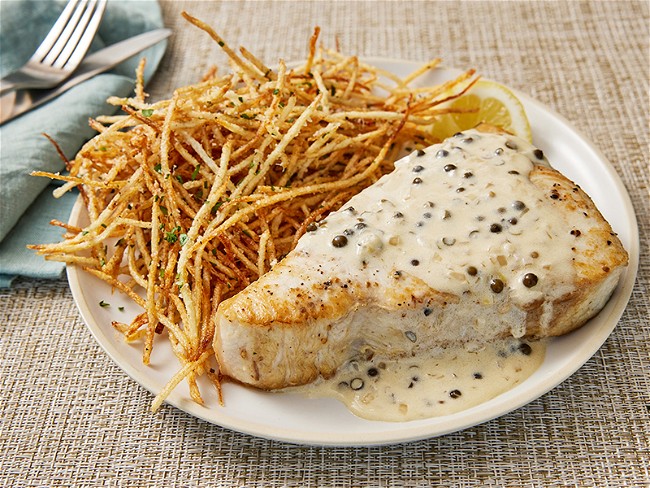
Peppercorn Swordfish & Shoestring Frites Recipe
A fresh twist on steak au poivre, this dish pairs meaty swordfish with the bright, punchy flavor of green peppercorns and a lighter white wine sauce instead of traditional cognac. Finished with crispy shoestring fries, this recipe delivers a hearty, flavorful alternative to red meat.

Grilled Lemon and Garlic Swordfish Kebobs Recipe
Swordfish gets a quick marinade in olive oil, lemon, garlic, and oregano before hitting the grill with summer vegetables. Serve over rice or stuffed into a pita with an extra squeeze of lemon.
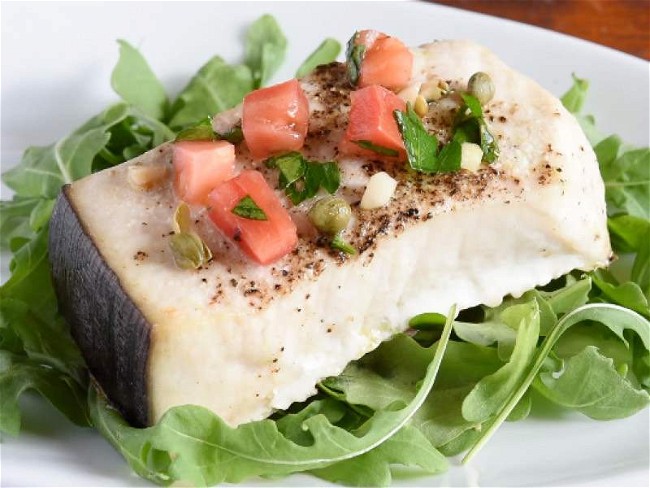
A simple, reliable weeknight recipe that lets the swordfish's natural richness take center stage.
FAQ
What is pumpkin swordfish?
Pumpkin swordfish is the nickname for swordfish with orange-tinted meat, caused by carotenoid pigments that build up in the flesh from a heavy shrimp and crustacean diet. "All I had to do was cut a pumpkin swordfish in half, and it sold itself," DiGregorio says.
It is suggested that only 1 in 3,000 swordfish harvested are pumpkin swordfish. This rarity commands a premium price, though whether it actually tastes better is genuinely debated. "I've eaten swordfish of every shade and color, and all things being equal, I'm not sure I can tell the difference."
Is swordfish safe to eat?
Yes, swordfish is a safe protein for most healthy adults. As a large, long-lived predator, swordfish accumulates higher mercury levels than smaller species. The FDA recommends pregnant women, nursing mothers, and young children limit consumption to one 3-ounce serving per month. For everyone else, a few servings per week present no meaningful health concern when eating a varied diet. Always consult your doctor for personalized dietary recommendations.
Is swordfish kosher?
Swordfish is not considered kosher. Kosher fish must have both fins and scales, and swordfish lose their scales as they grow to maturity. Most Orthodox authorities rule that this disqualifies swordfish, and it is not found in kosher-certified markets. Some reform or conservative authorities have ruled that swordfish may be kosher because the juveniles have scales.
