Your Essential Guide to Tuna

Long before sushi restaurants lined city blocks or seared ahi tuna became a steakhouse staple, Americans had a very different relationship with tuna. In the early 1900s, sardine canneries along California's coast started experimenting with the abundant albacore tuna swimming offshore. What began as an attempt to salvage a slow sardine season launched an industry that would make tuna one of America's most consumed proteins. By World War II, canned tuna had become a pantry essential, fueling soldiers overseas and families at home.
Fresh tuna took a different path entirely. For decades, American commercial fishermen tossed bluefin tuna overboard as worthless bycatch or sold it for very little to use as pet food, unaware that Japanese buyers would eventually pay thousands for a single fish. The 1970s sushi boom changed how America valued tuna. Suddenly, the same fish once sold as cat food commanded record auction prices.
Today, tuna bridges the worlds of cheap cans and luxurious omakase. Tuna remains one of America's most consumed seafoods, with canned formats accounting for most of America’s consumption, while fresh tuna is growing increasingly prized in home kitchens and restaurants alike.
Robert DiGregorio, the head of quality control at Fulton Fish Market, has spent decades evaluating tuna. Known in the industry as "Bobby Tuna," he literally wrote the book on the subject: Tuna Grading and Evaluation. His expertise, shared throughout this guide, shares everything you need to know about selecting and enjoying the best tuna for your next meal.
- What Is Tuna?
- What Does Tuna Taste Like?
- Types of Tuna
- How To Buy Tuna
- Is Tuna Sustainable?
- Where To Buy Tuna
What Is Tuna?
Tuna are fast-swimming saltwater fish, belonging to the Scombridae family alongside mackerel and bonito. Built for speed, tuna can reach bursts of 40+ mph and migrate thousands of miles across the open ocean. Unlike most fish, tuna are warm-blooded, maintaining body temperatures above their surrounding water. This adaptation allows tuna to thrive in both tropical and temperate waters while developing the dense, meaty flesh that sets them apart from other seafood.
Tuna are apex predators with voracious appetites, feeding on smaller fish, squid, and crustaceans. Their fat-rich diet and constant swimming contribute to their buttery, red flesh and concentrated flavors.
What Does Tuna Taste Like?
Quality tuna delivers a savory depth that rivals beef in richness, with flavor varying significantly by species and grade. Higher-fat species, like bigeye and bluefin tuna, have a silky, almost buttery quality that melts on your tongue, while leaner cuts offer a firmer bite with more pronounced minerality. Needless to say, fresh tuna tastes nothing like what comes out of a can.
Types of Tuna
Over a dozen tuna species swim the world's oceans, but only a handful appear regularly in American markets. Here are the types of tuna you're most likely to encounter, from everyday options to the most prized specimens.
- Yellowfin tuna (Thunnus albacares), known in Hawaiian as ahi, is the most commonly available tuna species weighing more than 10 pounds. These impressive fish can reach 200 pounds, with some exceeding 400 pounds. Yellowfin gets its name from its bright yellow dorsal and anal fins. The flesh ranges from light pink to deep red, depending on fat content, with a clean flavor that's less intense than bluefin and more complex than albacore. Yellowfin is the workhorse of fresh tuna, equally suited to sushi, searing, or grilling. You can find yellowfin tuna year-round, with Atlantic catches peaking from May through October.
- Skipjack tuna (Katsuwonus pelamis) accounts for 57% of the global tuna catch, making it the world's most harvested tuna species. These smaller tuna typically weigh 6 to 8 pounds and rarely exceed 3 feet in length. Skipjack has dark red flesh with a stronger, more pronounced flavor than other species. Nearly all skipjack ends up canned as "chunk light" tuna rather than sold fresh. Found in tropical and warm temperate waters worldwide, skipjack schools near the surface and can be harvested year-round. This species is widely used in Japanese cuisine as a source of umami (savoriness) for soup stocks and other dishes.
- Albacore tuna (Thunnus alalunga), sometimes called white tuna, are fished around the world, while the Pacific Northwest and Hawaii are most abundant for domestic Pacific albacore. These fish have pale pink to light tan flesh that immediately distinguishes them from other tuna species. Albacore vary in size, ranging from 10 to 40 pounds, with firm, lean meat and a mild flavor compared to larger tuna species. Albacore is a versatile fish in the kitchen, with most going to canned "solid white" or "chunk white" tuna products, while also being featured fresh on menus around the world. Fresh albacore is excellent raw, grilled, or seared, and its firm texture holds up well to bold seasonings. While canned and frozen formats are available year-round, fresh albacore is most abundant during the autumn months.
- Bigeye tuna (Thunnus obesus) is also known as ahi in Hawaii and is often confused with yellowfin when whole, but trained eyes spot the differences. Bigeye tuna have larger eyes (hence the name), rounder bodies, and flesh that tends toward deeper red with higher fat content. These fish typically weigh 80 to 180 pounds and have fatty meat with rich flavor, making them prized for sashimi and commanding a higher price tag than yellowfin. Most commonly caught in the US Mid-Atlantic, bigeye are in peak season from late summer through fall.
- Bluefin tuna (Thunnus thynnus for Atlantic, Thunnus orientalis for Pacific, Thunnus macoyii for Southern) represents the pinnacle of the tuna world. These magnificent fish can exceed 1,000 pounds and live 40+ years. Bluefin flesh is deeply marbled with fat, particularly in the belly sections prized as "toro" in Japanese cuisine. The flavor is intensely rich with a buttery quality unmatched by other seafood species and likened to wagyu beef. Bluefin makes up just 1% of global tuna production, and strict quotas combined with insatiable demand keep prices at luxury levels. Pacific bluefin are found year-round, while Atlantic bluefin season runs from June through November.
How Does Tuna Grading Work?
Fresh tuna is graded based on the meat’s fat content, color, texture, and overall quality. Here’s our quick reference guide to each tuna grade:
| Grade | Characteristics | Serving Suggestions |
| #1 (Sashimi Grade) | High fat content with visible marbling close to the edges of the tuna. Sticky texture when touched. Deep red color that's shiny and translucent. | Raw preparations like sashimi, sushi, crudo, tartare, poke |
| #2+ | Moderate fat, generally leaner than #1. Wet, smooth texture. Good red color with brightness, though less translucent than #1. | Raw preparations, quick seared tuna steaks or tuna burgers (rare to medium-rare), high-quality cooked dishes |
| #2 | Minimal fat content. Texture is lean without stickiness. Red color is uneven and lacks the clarity of higher grades. | Seared tuna steaks (medium to medium-well), grilled, poached, roasted |
| #3 | Little to no visible fat. Dry texture. Dull, brownish color. | Fully cooked preparations only, casseroles, salads |
"At one time, #2 tuna was the most popular grade for restaurants," DiGregorio explains. "But with sushi and sashimi becoming so popular, #1 and #2+ have taken a much bigger share of the market."
How To Buy Tuna
How To Buy Fresh Tuna
When buying fresh tuna, color tells much of the story, but not always in the way you'd expect. Natural, high-quality tuna ranges from bright to deep red, sometimes with burgundy or even purple-ish tones depending on the species, fat content, and how recently it was caught. What you should not see is an unnaturally vibrant, watermelon-pink color that stays consistent throughout the flesh. This often indicates carbon monoxide (CO) treatment, a process where tuna is exposed to gases to preserve a fresh-looking color long after the fish has spoiled.
CO-treated tuna isn't innately dangerous, but it masks the visual cues that would normally tell you a fish is past its prime. "The problem with CO-treated tuna is you can't trust what you're seeing," DiGregorio warns. "A treated piece might look fine but actually be several days older than an untreated tuna that looks less vibrant."
Beyond color, look for firm flesh that springs back when gently pressed and a clean, oceanic smell with no ammonia or sourness. High-grade tuna should have a slightly tacky, almost sticky feel to the surface once patted down.
How To Buy Frozen Tuna
Frozen tuna is just as good as, if not better than, fresh when handled properly. In fact, much of the "fresh" tuna sold at fish counters was previously frozen, then thawed for display. When possible, choose tuna that was flash-frozen at sea shortly after harvest, as this method locks in quality better than fish frozen days later onshore.
Bobby noted after a trip to Tokyo’s markets that tuna auctions include both fresh and frozen tuna. “They have a whole auction specifically for frozen tuna because Japan’s buyers know that some of the best tuna available is frozen.”
At Fulton Fish Market, our frozen tuna is vacuum-sealed at peak freshness, so what you thaw at home matches what left the boat.
When shopping for frozen tuna, look for tuna in vacuum-sealed packages. Ice crystals inside the packaging suggest the fish has been thawed and refrozen, or improperly sealed, both of which degrade the texture of your fish. Avoid any packages with visible frost buildup or white, dry patches on the flesh, which are both signs of freezer burn.
The color of frozen tuna will appear darker and less vibrant than fresh, which is normal. The natural color returns when thawed. The flesh should still look consistent without discoloration or gray spots. Be wary of frozen tuna that looks unnaturally bright pink or red, as carbon monoxide treatment is common in frozen tuna products as well.
Is Tuna Sustainable?
Tuna sustainability varies dramatically by species, fishing method, and management practices. Some tuna populations have rebounded thanks to strict quotas and improved practices, while others remain under pressure.
Skipjack tuna is generally considered the most sustainable option due to its fast reproduction and abundant populations. Both Atlantic and Pacific bluefin tuna, by contrast, were severely overfished for decades, though recent management has allowed some recovery. Yellowfin and albacore tuna species are both sustainable options when properly sourced.
Considering the harvesting method is just as important as the species for finding sustainable tuna. Tuna are harvested using several methods, each with different quality and environmental implications. Measures have been taken to ensure pole-and-line and troll-caught tuna have minimal bycatch or environmental impact. Purse seine fishing on free-swimming schools (rather than fish aggregating devices) is also considered relatively sustainable. Longline fishing poses greater risks to non-target species, such as sea turtles and sharks.
At Fulton Fish Market, we only source tuna that meets our sustainability standards, prioritizing responsible practices that protect ocean ecosystems while delivering exceptional quality.
Is Tuna Wild or Farmed?
Tuna is mostly wild-caught. The rise of tuna farming from eggs or tuna ranching, where wild tuna are captured and grown to harvesting size in ocean pens, represents a growing segment of the market as well. Both wild and farmed harvesting have a place in sustainable tuna supply for future generations.
Is Tuna Good For You?
Each species of tuna offers exceptional nutritional benefits, making tuna an excellent choice for health-conscious eaters. A 3-ounce serving of yellowfin (ahi) tuna, for example, provides approximately 26 grams of high-quality protein, just 130 calories, minimal total fat (1.5g), and no carbohydrates or saturated fat.
Tuna is particularly rich in omega-3 fatty acids, with 200-1300mg in a single 3-ounce serving, supporting heart and brain health. It's also an excellent source of vitamin B12, selenium, vitamin D, potassium, and phosphorus. For those following high-protein, low-carb eating plans like keto or Whole30, tuna makes an ideal protein choice.
Where To Buy Tuna
Fulton Fish Market is proud to deliver the highest quality tuna nationwide. Our expertise guides every tuna purchase we make; sourcing only from the most sustainable producers and checking fat content, color, texture, and freshness indicators that come from our over 200 years of hands-on experience. We reject CO-treated tuna and anything that doesn't meet our grading standards. The result is tuna you can trust.
Our Favorite Tuna Recipes
Ready to put your tuna knowledge to work? These recipes showcase different grades and cooking methods.
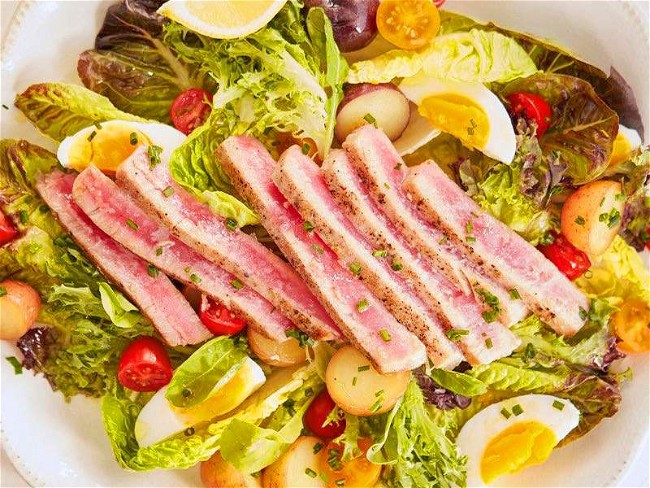
Seared Tuna Niçoise Salad Recipe
This French classic traditionally uses canned tuna, but gets leveled up by searing fresh ahi tuna steaks.
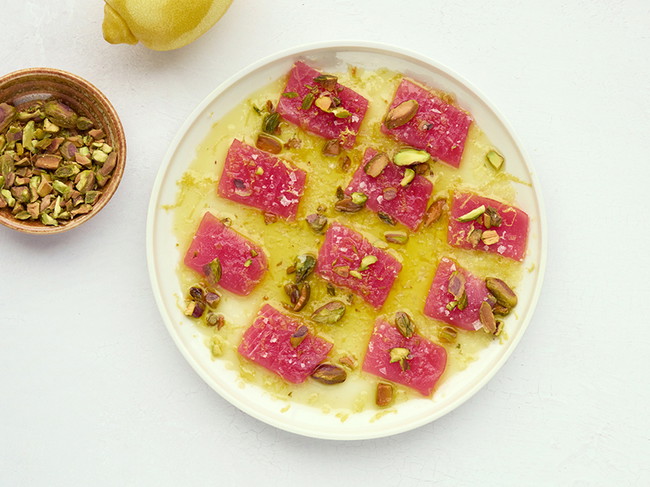
When you have pristine #1 grade tuna, sometimes the best approach is the simplest. Thin slices with citrus, olive oil, and a touch of heat let the fish shine in this recipe.
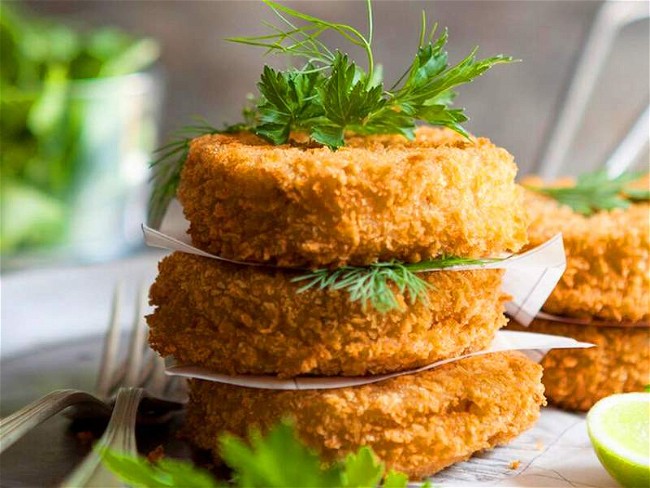
An excellent use for almost any grade of tuna, these cakes get a crispy exterior while keeping the interior moist and flavorful.
FAQs
Does tuna have mercury?
Tuna contains both mercury and selenium, a compound that’s been found to minimize mercury’s effects, with levels varying by species. Larger, longer-lived species like bluefin and bigeye accumulate more mercury than smaller species like skipjack and albacore. For most adults, eating a 3oz portion of any tuna species 2-3 times per week poses no significant health risk. Those concerned about mercury can opt for smaller species or read more information in our Mercury in Seafood article.
Can you eat tuna while pregnant?
Pregnant women can safely eat certain types of tuna in moderation, and the FDA recommends limiting consumption of higher-mercury species. Skipjack and canned light tuna are lower-mercury options suitable for a couple of 3-oz servings per week. Yellowfin (ahi) tuna may be occasionally enjoyed in moderation during pregnancy as well. Bigeye and bluefin tuna should be avoided during pregnancy out of an abundance of caution due to their higher mercury content. Always consult your healthcare provider for personalized dietary guidance.
How big can tuna get?
Atlantic bluefin tuna hold the record for the largest tuna species, sometimes reaching over 10 feet long and 1,000 pounds. The largest bluefin on record was caught off Nova Scotia in 1979, weighing 1,496 pounds. Most market tuna are considerably smaller: skipjack averages 6-8 pounds, albacore 10-25 pounds, and yellowfin 30-200 pounds.
What is false albacore?
False albacore (Euthynnus alletteratus), also called little tunny, is a smaller member of the tuna family found in Atlantic waters. False albacore has dark, strongly flavored flesh that some consider too "fishy" for eating, making it popular as a sport fish but rarely sold for food. If you see "albacore" at a premium price, it should be true albacore (Thunnus alalunga) with characteristically pale flesh instead of the darker false albacore.
What is the difference between yellowfin and ahi tuna?
Yellowfin and ahi tuna are the same species. "Ahi" is the Hawaiian name for both yellowfin and bigeye tuna, though ahi typically refers only to yellowfin in mainland American markets.
When is the best season to buy tuna?
Fresh tuna is available year-round thanks to global fisheries and cold supply chains, but quality peaks at different times depending on species. Atlantic bluefin reaches prime condition in early fall. Bigeye and yellowfin are at their best from late summer through fall. Albacore season on the Pacific coast runs late spring through early fall.
What is white tuna?
White tuna is a vague description sometimes seen on menus, especially sushi menus. White tuna can sometimes be used to describe albacore. It’s more often a misnomer for escolar, a problematic fish that can cause serious digestive issues. "Next time you see 'white tuna' on a restaurant menu, ask to make sure it's really albacore," DiGregorio advises. "If it’s uncertain, it’s best to avoid it as it may not be a tuna at all.”
What is the difference between chu-toro and o-toro?
Chu-toro and o-toro are both cuts of tuna belly, generalized as “toro.” O-toro is among the richest cuts of tuna, found in the lower belly and characterized by intense fat marbling. Chu-toro is a medium-fatty tuna cut, found right above the o-toro and holding less fat than o-toro and more than a typical cut of tuna loin.