Dry Scallops vs. Wet Scallops: What's the Difference?

The difference between a restaurant-quality seared scallop and a soggy disappointment often comes down to something most home cooks don't know to look for: whether their scallops are dry-packed or wet-packed. If you've ever cooked scallops on high heat and wondered why they steamed in the pan instead of developing that golden, caramelized crust, the answer is most likely that you were using lower-quality wet scallops instead of dry scallops.
Unfortunately, buying wet scallops is an easy mistake to make. A Boston Globe investigation found that the majority of scallops sold in U.S. grocery stores are wet scallops, with some containing as much as 85% water. In Canada, scallops with more than 81% moisture can't legally be sold—a consumer protection that American shoppers don't have.
To help us break down the differences between dry and wet scallops, we spoke with Daniel McQuade, a seafood industry veteran who helped build one of the largest fresh scallop companies in the United States that was a long-time supplier of the Fulton Fish Market before joining FultonFishMarket.com to bring the very best seafood to your door.
Find answers to all your questions about dry vs. wet scallops so you can confidently purchase and cook your own scallops today.
- Quick Reference: Identifying Dry Scallops vs Wet Scallops
- What Are Dry Scallops?
- What Are Wet Scallops?
- Why Dry Scallops Are Typically A Better Choice
- How To Spot The Difference Between Dry and Wet Scallops
- Where To Buy Dry Scallops
Quick Reference: Identifying Dry Scallops vs Wet Scallops
| Feature | Dry Scallops | Wet Scallops |
|---|---|---|
| Taste | Clean yet rich, slightly briny, and subtly sweet | Metallic, bland |
| Color | Off-white, ivory, occasionally pink or orange | Bright, milky white |
| Shape | Cylindrical or disc-like with crisp edges | Bloated, bulbous or deflated with less identifiable edges |
| Smell | Clean, oceanic | Chemical or sour |
| Texture | Firm, lightly tacky to lightly damp | Noticeably damp or slimy |
| Ingredients | Scallops | Scallops, water, sodium tripolyphosphate (STPP) |
What Are Dry Scallops?
Dry scallops, or dry-packed scallops, are scallops that have been shucked and chilled without any chemical treatment. They are processed as simply as possible: removed from the shell and kept cold. That's it. "The freshest scallops wiggle sort of like jello," says McQuade. "We call those 'jelly scallops,' and they're the top of the catch."
Because nothing has been added, dry scallops give you the truest scallop flavor and the best cooking performance. The shape of dry sea scallops is more rigid, maintaining their cylindrical shape well with clearly defined edges.
Dry-packed sea scallops have a natural-looking appearance, ranging from slightly off-white to ivory, light pink, or sometimes light orange. This color variation is completely normal and has no impact on flavor or quality. The scallops should smell like clean ocean water, never sour or chemical.
For more on scallop varieties and selection, check out our Essential Guide to Scallops.
What Are Wet Scallops?
Wet scallops are scallops that have been treated with a preservative containing sodium tripolyphosphate (STPP), which extends shelf life and causes the scallops to absorb water. Processors use this treatment because it adds weight (which increases profit per pound) and keeps scallops looking uniformly white for longer.
You can often spot wet scallops by their bright, almost stark white color and the milky liquid pooling in the package. Wet scallops won’t hold their shape as firmly as dry scallops, appearing more bulbous than cylindrical. They will also feel extra slippery to the touch, with cloudy water between each scallop.
Why Dry Scallops Are Typically A Better Choice
The case for dry scallops comes down to three things: how they cook, how they taste, and the value you get for your money. While wet scallops may be passable when mixed into dishes like stir-fries, dry scallops reign supreme as the star of any dish.
- A proper sear: When dry scallops, with their natural moisture content, come into contact with a hot pan, they develop a beautiful sear in 1-2 minutes per side. When wet scallops hit a hot pan, the water they've absorbed is released immediately. Instead of caramelizing against the cooking surface, the scallops end up steaming in their own liquid. You will never achieve that golden crust with wet scallops, no matter how hot your pan gets or how long you wait.
- Taste: They taste like scallops! While we wish all scallops tasted like their natural best, STPP can leave a faint soapy or metallic aftertaste that masks the clean brine and sweetness scallops are known for. Dry scallops taste purely of themselves, with that characteristic mild sweetness and slight minerality that makes them so appealing.
- Honest value: Wet scallops can contain 25% or more added water weight. "A pound of wet scallops can actually be only 12 ounces of real scallop meat and 4 ounces of water," McQuade notes. Dry scallops cost what they cost because you're paying for pure scallops, not a chemical solution.
How To Spot The Difference Between Dry and Wet Scallops
When shopping for scallops, here's what to look for:
- Check the color. Dry scallops range from off-white to ivory, light pink, or light orange. Wet scallops are typically bright white, sometimes almost unnaturally so.
- Look at shape and texture. Dry scallops will have defined edges and minimal water around them. If the scallops appear bulbous or there's milky liquid pooling around them, they've likely been chemically treated. "Wet scallops are spongy and nearly bouncy," McQuade explains. "A dry scallop will be firm, dense, and meaty."
- Read the label. Terms like "dry-packed," "chemical-free," or "all natural" indicate dry scallops. If you see "water added" or sodium tripolyphosphate in the ingredients, they are wet scallops.
- Ask directly. A good fishmonger will know exactly what they're selling and should be able to tell you whether their scallops are dry or wet.
Where To Buy Dry Scallops
At Fulton Fish Market, we exclusively source dry-packed sea scallops from our trusted fishermen. Every scallop arrives without chemical treatment, so you never have to guess or inspect packaging. They are guaranteed to sear beautifully and taste exactly as scallops should. Our Scallop Size Chart can help you choose the right size scallops for your favorite cooking method.
Recipes For Dry-Packed Scallops
Ready to put your scallops to work? These recipes showcase the best of scallops’ flavors with a proper sear or broil:
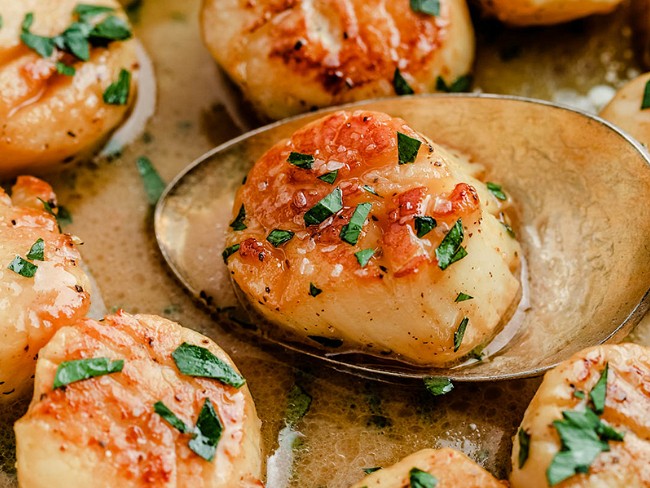
Sweet, succulent sea scallops are seared to perfection before being added to a flavorful lemon-butter sauce. This recipe is easy to perfect and renders an impressive meal for any occasion!
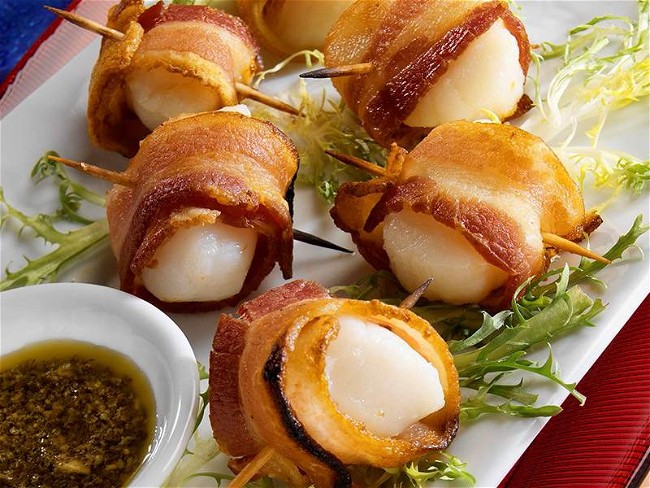
Bacon-Wrapped Scallops with Pesto Recipe
We feel the best way to cook bacon-wrapped scallops is under the broiler, for quick cooking time and little mess. Serve with a flavorful pesto dipping sauce that complements the fresh flavor of the scallops. This will be your new dinner party go-to!
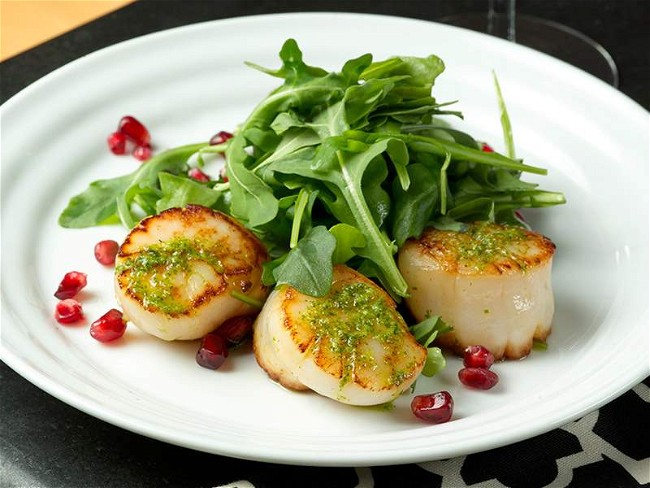
Seared Dry Scallops with Chimichurri Recipe
Enjoy this fabulous recipe for seared dry sea scallops with chimichurri that's guaranteed to please. Add fresh arugula and pomegranate seeds for some added flavor.
FAQs
Are bay scallops available as dry or wet?
Yes, bay scallops can be either dry or wet-packed, just like sea scallops. Dry bay scallops will have better flavor, sear more effectively, and offer better value since you're not paying for added water weight. Because bay scallops are so small (typically 60-100 per pound), the moisture difference is even more noticeable, with wet bay scallops turning mushy quickly when cooked. Look for the same indicators as sea scallops to find dry bay scallops: a natural ivory or pinkish color, minimal pooling liquid, and labels that say "dry-packed" or "chemical-free."
Are dried scallops the same as dry scallops?
No. Dried scallops, sometimes called conpoy, are a completely different product from fresh or frozen dry-packed scallops. Dried scallops have been dehydrated and preserved, used primarily in Chinese cooking to add umami depth to soups, rice dishes, and sauces. When we talk about "dry scallops," we mean fresh or frozen scallops that have not been treated with chemicals, not dehydrated scallops. We do, however, love dehydrated scallops as an ingredient in their own category!
Can you still sear wet scallops?
You can try searing wet scallops, but the results will likely be disappointing. If wet scallops are your only option, pat them extremely dry with paper towels, make sure the pan is smoking hot, and don't crowd it. You may get some color, but it won't compare to what dry scallops achieve.
Are dry scallops more expensive?
The price per pound is often slightly higher, but dry scallops are actually a better value. Since wet scallops contain as much as 25% added water weight, you're paying premium prices for water that cooks off immediately. Pound for pound, you get more actual scallop meat with dry scallops.
Why do stores sell wet scallops?
Wet scallops are often sold because they keep longer and can increase the cost to you, the consumer. "Wild USA sea scallops were almost fished out about twenty-five years ago," McQuade explains. "The recovery program worked, but it created a supply-and-demand imbalance that increased costs. Some unscrupulous processors—not the fishermen—use water to increase weight cheaply."